


More and more people are looking for places where the gastronomic experience goes beyond what’s on the plate — where atmosphere, service and tradition matter just as much as flavours. But does a truly traditional Hungarian restaurant in Budapest still exist, one where even our grandparents would feel at home?
The answer is yes, but you need to know what to look for. Traditional Hungarian hospitality has certain hallmarks that only a few genuinely authentic places preserve today. In this article, we explore what makes a Hungarian restaurant in Budapest truly traditional, the values of Hungarian cuisine, and where you can still experience these qualities in an authentic way.
What Makes a Hungarian Restaurant Traditional?
Traditional Hungarian restaurants are special for more than just their food. A place that truly reflects the spirit of the past builds its character from several elements:
- Food and recipes: Dishes with centuries of history such as goulash, fish soup, stews or Hortobágyi pancakes, prepared according to original recipes.
- Location and interior: Vaulted spaces, tiled stoves, folk motifs, rustic wooden furniture and floral patterns.
- Serving style: Cast-iron pots, porcelain plates, red-and-white checkered tablecloths and classic metal cutlery.
- Service: Polite, personal hospitality, sometimes with staff dressed in traditional-inspired attire.
- Music: Live gypsy music or traditional Hungarian melodies..
- Drink selection: Homemade pálinka, Tokaji wines, Unicum, authentic aperitifs and digestifs.
Enjoying these dishes on the terrace of a restaurant in Buda Castle can feel like a journey through time, where past and present meet on the plate.
What Are the Classics of Hungarian Cuisine?
Hungarian cuisine is one of the richest and most distinctive gastronomic traditions in Europe. A restaurant in the heart of Budapest — especially one rooted in tradition — is the perfect place to showcase this diversity. But what makes it so special?
- Paprika above all: Sweet Hungarian paprika is a cornerstone of countless dishes, from stews to goulash and lecsó.
- Onion, lard and garlic: These bold flavours form the backbone of many traditional recipes.
- Slow cooking techniques: Stews, soups and braised dishes only reach their full depth of flavour with time.
- A rich soup culture: Meat broth, Palóc soup or Jókai bean soup — a proper meal often starts here.
- Pasta dishes and desserts: Cottage cheese noodles, aranygaluska, somlói sponge cake and strudels — the sweet side is just as strong as the savoury.
- Seasonality and hearty dishes: The cuisine adapts to the seasons, with richer dishes in winter and lighter ones in summer.
These flavours span generations and are proudly served in many iconic districts of Budapest, especially in the Buda Castle area.
A Good Drink Before or After the Meal
In traditional Hungarian dining culture, a well-chosen drink has always played an important role. An aperitif before the meal sets the mood, while a full-bodied wine alongside a stew elevates the experience. Unicum is one of the most iconic Hungarian aperitifs, its herbal character perfectly preparing the palate. Homemade pálinka — often made from apricot, sour cherry or plum — instantly evokes rural Hungarian traditions.
For main dishes such as beef stew or pork paprikash, wines like Kékfrankos or Bikavér pair beautifully, their acidity and spice complementing the flavours. After the meal, a glass of Tokaji Aszú, honey liqueur or vermouth offers an elegant finish, honouring tradition.
What Is a Truly Traditional Hungarian Restaurant in Budapest?
These restaurants don’t just reference the past on the menu. Folk motifs, embroidery and elements inspired by historic inns appear in the interior. Menus are often bilingual, featuring dishes unfamiliar to many foreigners — such as stuffed cabbage, lebbencs soup, strapačka or cottage cheese noodles with cracklings. Meals may begin with a homemade aperitif and end with classic desserts like somlói sponge cake or Gundel pancakes.
This style of Hungarian cuisine is about tradition, hospitality and slow enjoyment — where there’s time to linger over lunch or dinner, talk, toast and order another round.
The Best Places for Traditional Hungarian Cuisine in Budapest
The iconic restaurants of the Zsidai Group offer authentic Hungarian gastronomy while meeting modern expectations of quality hospitality.
1. Pest-Buda Bistro: The Timeless Classic
Crispy schnitzel, goulash soup, Brassói-style pork, homemade syrups and comforting desserts in a welcoming setting.
2. Fekete Holló: Legendary Dishes in a Historic Setting
One of Budapest’s oldest Hungarian restaurants, with a 19th-century atmosphere, inner courtyard, crafted furniture and hearty flavours.
3. ÉS Bisztró: Elegance in the City Centre
A refined restaurant on Deák Ferenc Street offering Hungarian dishes alongside international classics, all made with premium ingredients.
4. 21: Classics with a Twist
Representing contemporary Hungarian gastronomy, where traditional flavours remain but appear in a fresh, modern form, with confident, trend-conscious touches.
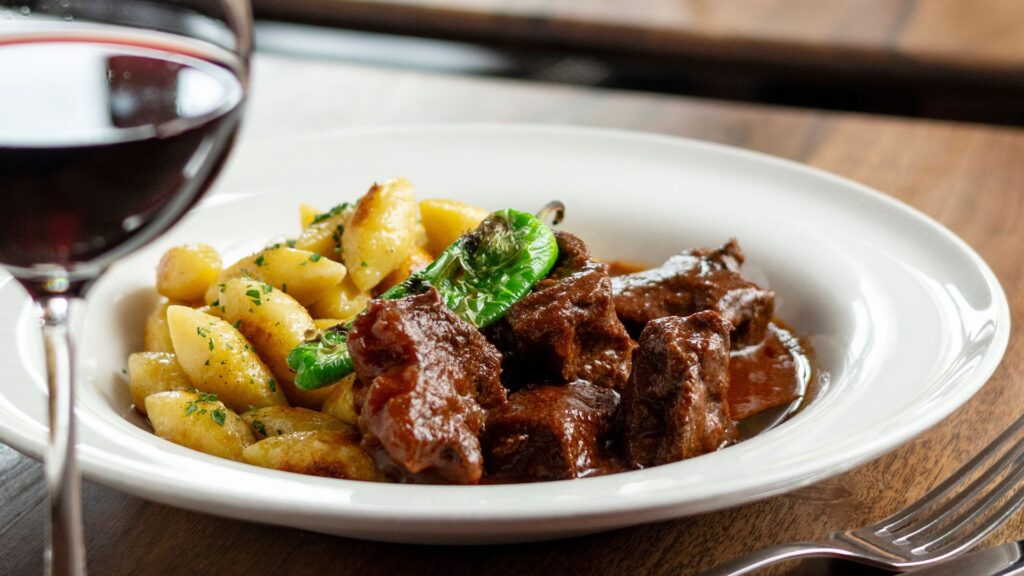
Traditional or Reimagined? The Influence of Fine Dining on Hungarian Cuisine
The flavours and ingredients of traditional Hungarian cuisine, rooted in centuries of history, are today increasingly meeting modern kitchen techniques and the world of fine dining. This is especially true in Budapest, where several Hungarian restaurants set gastronomic trends while remaining faithful to their roots.
Classic dishes — such as beef stew, stuffed cabbage or Hortobágyi pancakes — take on new forms in many restaurants: lighter sauces, precisely measured portions and presentations based on seasonality. In these reinterpreted versions, the focus often shifts from quantity to quality, texture and creative plating. Traditional, heavier ingredients are increasingly replaced by more health-conscious alternatives.
At the same time, many still seek the original flavours and experiences — where a waiter offers homemade pálinka as an aperitif in traditional attire, and goulash arrives at the table in a classic cast-iron pot.
This duality — respect for the past and creativity of the present — is what makes Hungarian cuisine so exciting, and why a traditional Hungarian restaurant can be an equally meaningful experience for grandparents, food enthusiasts and tourists alike.
Quality and Tradition: Hungarian Cuisine in the Best Locations in Budapest
Those who truly want to understand Hungarian culture cannot skip its gastronomy. A traditional Hungarian restaurant in Budapest offers more than a meal: it offers atmosphere, history, and heritage — an authentic cultural experience in one of the city’s most meaningful settings.