


Few ingredients are as deeply connected to a country’s identity as paprika is to Hungary. More than just a spice, it is a symbol of tradition, craftsmanship, and culinary heritage. Its vibrant red color and unmistakable aroma have shaped the character of Hungarian cuisine for centuries.
To understand Hungarian food is to understand Hungarian paprika. It is the foundation behind some of the country’s most iconic dishes, the element that gives them warmth, depth, and a signature flavor that is instantly recognizable.
But paprika is more than a seasoning. It is a story — one that begins with a simple plant and ends on the plate in forms both rustic and refined.
What is Hungarian paprika?
Paprika is a ground spice made from dried peppers belonging to the Capsicum annuum family. While paprika exists in many countries, Hungarian paprika stands apart due to its quality, variety, and the care that goes into its production.
Unlike generic paprika powders, Hungarian paprika offers a wide spectrum of flavors — from sweet and mild to intensely hot. It is not simply used to add color; it defines the taste of a dish.
Its uniqueness comes from three key elements:
- the specific varieties of peppers grown in Hungary
- the country’s climate and soil conditions
- traditional processing methods
Together, these factors create a spice that is both complex and versatile.
What makes Hungarian paprika unique?
Paprika’s distinctiveness lies in its ability to add more than just spice. It brings:
- Color – deep red tones that define the visual identity of Hungarian dishes
- Aroma – warm, slightly sweet, sometimes earthy
- Flavor complexity – balancing sweetness, bitterness, and heat
Unlike chili powders, Hungarian paprika is rarely harsh. Even its spicier versions maintain a rounded, layered taste.
Another defining characteristic is how it is used. In Hungarian cuisine, paprika is often gently toasted in fat (such as oil or lard) at the beginning of cooking. This releases its aroma and creates the base of the dish.
What does Hungarian paprika taste like?
Paprika’s flavor is often described as warm, slightly sweet, and gently earthy. Compared to other spices, it is less aggressive, allowing it to blend seamlessly with other ingredients.
In milder forms, it adds depth without overwhelming the palate. In spicier versions, it introduces heat in a balanced way.
If you’re trying to compare it to something familiar, paprika sits somewhere between bell pepper sweetness and chili warmth — but with a unique smoothness that makes it instantly recognizable.
From pepper to spice: how Hungarian paprika is made
The journey of paprika begins in the fields, where peppers are cultivated under carefully controlled conditions. Regions like Szeged and Kalocsa are particularly famous for their paprika production. After harvesting, the peppers go through several stages:
- Drying
Traditionally, peppers are air-dried, sometimes strung together and hung in well-ventilated spaces. This process preserves their color and concentrates their flavor.
- Grinding
Once dried, the peppers are ground into a fine powder. The grinding process is crucial — it determines the texture and consistency of the final product.
- Blending
Different parts of the pepper (flesh, seeds, veins) are blended in varying proportions to create specific paprika types. This is how Hungarian producers achieve the wide range of flavor profiles.
The result is a spice that is not only visually striking but also rich in aroma and taste.
Types of Hungarian paprika: from sweet to spicy
Hungarian paprika is known for its diversity. Each type has its own role in the kitchen.
Sweet paprika
The most commonly used variety. Mild, slightly fruity, and rich in color, it forms the base of many classic dishes.
Noble sweet
A premium category with balanced flavor and vibrant color. Often used in traditional recipes where both taste and appearance matter.
Semi-sweet and delicate
A softer, more refined version, ideal for lighter dishes.
Hot paprika
Adds heat and intensity. Used sparingly to enhance, rather than dominate, a dish.
Smoked paprika (less traditional but increasingly popular)
Introduces a deeper, smoky character, often used in modern interpretations.
This range allows chefs to fine-tune dishes with remarkable precision.
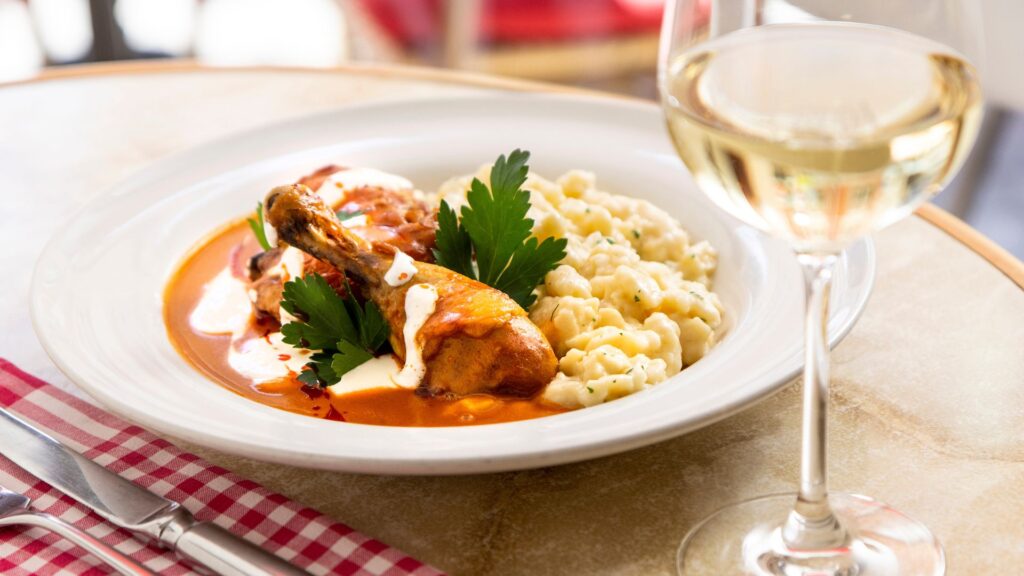
Iconic Hungarian dishes made with paprika
Paprika is the heart of many traditional Hungarian recipes. Without it, these dishes would simply not exist in their current form.
Chicken paprikash
A creamy, paprika-based dish where the spice provides both color and depth. Paprikash is one of the most approachable Hungarian specialties.
Fisherman’s soup (halászlé)
A rich, spicy fish soup where paprika plays a central role in creating its bold flavor.
Goulash
Perhaps Hungary’s most famous dish, combining meat, vegetables, and paprika into a hearty, comforting meal.
Stuffed peppers
Sweet paprika enhances the flavor of the filling while contributing to the sauce’s character.
Pörkölt (stew)
A thick, slow-cooked dish where paprika forms the backbone of the sauce, creating a deep, satisfying taste
Hortobágyi pancake
Savory pancakes filled with meat and covered in a paprika-based sauce — a perfect example of how versatile the spice can be.
Catfish paprikash
A variation using fish instead of poultry, showcasing how paprika adapts across ingredients.
Each of these dishes highlights a different side of paprika, from mild sweetness to rich intensity.
Where to taste authentic paprika dishes in Budapest
To truly understand Hungarian paprika, you need to taste it in its natural environment: in dishes prepared by chefs who respect tradition while embracing modern techniques.
A well-chosen restaurant Budapest offers more than just food — it offers context, atmosphere, and authenticity. When selecting a Hungarian restaurant Budapest, it’s worth looking for places where paprika-based dishes are prepared with care and high-quality ingredients.
Discover paprika in the Buda Castle area
Dining in a Buda restaurant brings a different rhythm to the experience. The historic surroundings slow things down, allowing you to fully appreciate both the flavors and the setting. In a Buda Castle restaurant, this connection between history and gastronomy becomes even more pronounced.
Zsidai Group: where paprika comes to life
Zsidai Group restaurants offer some of the best opportunities to explore paprika-based Hungarian dishes in Budapest:
- Fekete Holló: a traditional setting where dishes like hortobágyi palacsinta and catfish paprikash highlight paprika’s versatility
- Pest-Buda Bistro: classic favorites such as stuffed cabbage or peppers and chicken paprikash, prepared with a modern touch
- Pierrot: elegant dining where paprika-based dishes gain refinement and balance
- 21 Hungarian Kitchen: contemporary interpretations including veal pörkölt and fisherman’s soup
- ÉS Bisztró: modern bistro cuisine featuring dishes like beef cheek stew with paprika influences
Each location presents a slightly different perspective, allowing you to experience how one spice can define an entire cuisine.
Why Hungarian paprika is more than just a spice
Hungarian paprika is not simply an ingredient — it is a cultural element. It connects generations, regions, and culinary traditions. It transforms simple dishes into something memorable and gives Hungarian cuisine its unmistakable identity.
In Budapest, this story unfolds on every plate. From traditional recipes to modern interpretations, paprika continues to shape the way people cook, eat, and experience food. Because sometimes, the most powerful ingredient is not the most complex — but the one that defines everything around it.