


Hungary has a curious relationship with dessert. A slice of cake can accompany an afternoon coffee. Sweet cottage cheese dumplings can become dinner. Pancakes may appear after soup and somehow constitute an entirely respectable meal. And an enormous bowl of aranygaluska placed in the middle of a Sunday table has never needed much justification.
Perhaps that is why Hungarian desserts reveal so much about the country. They tell stories of grand Budapest coffee houses and family kitchens, of the Austro-Hungarian culinary world and recipes passed from one generation to another. Walnuts, cottage cheese, poppy seeds, apricot jam, sour cherries, vanilla and chocolate appear again and again—but rarely in quite the same way.
If you only have a few days in Budapest, these are five classics worth leaving room for.
5 Hungarian desserts to put on your Budapest list
- Aranygaluska: warm walnut-coated yeast dumplings, currently served at 21 Hungarian Kitchen.
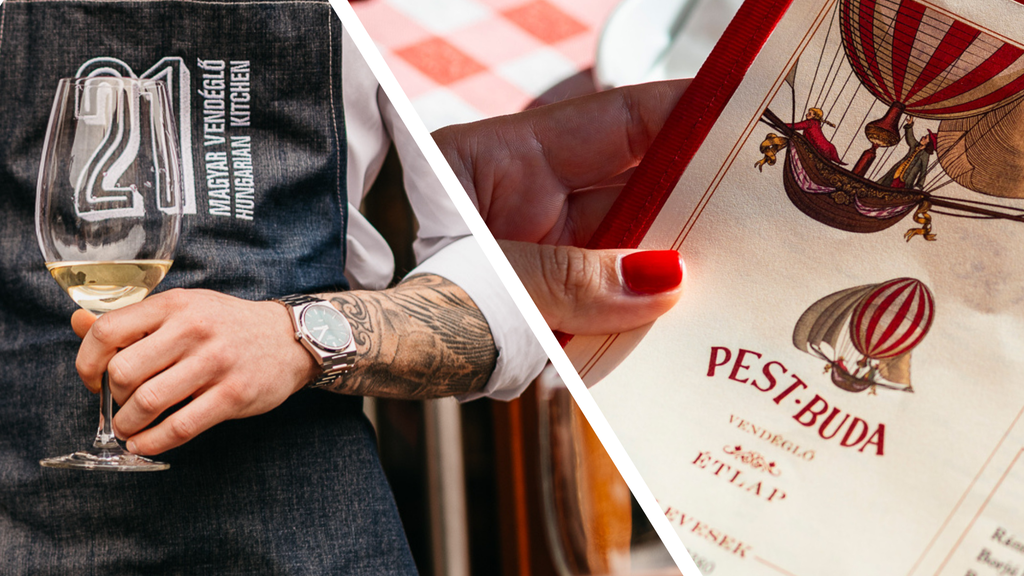
- Gundel pancake: pancakes with walnut and rich chocolate sauce; also on the menu at Pest-Buda.
- Somlói galuska: sponge cake, cream and chocolate in one gloriously messy dessert; discover 21’s interpretation in Buda Castle.
- Szilvásgombóc: soft Hungarian plum dumplings; currently served at Spíler Original in Gozsdu Udvar.
- Mákos guba: poppy seed dumplings with vanilla custard – at Fekete Holló Kisvendéglő.
1. Aranygaluska: the dessert made for sharing – although you may not want to
Aranygaluska translates roughly as “golden dumplings”, but the English name does not quite prepare you for what arrives.
Small pieces of soft yeast dough are coated with butter and walnuts, layered together and baked until golden. Traditionally, they are served warm with generous amounts of vanilla custard. The result sits somewhere between cake, sweet bread and pull-apart pudding.
It is exactly the kind of dessert that feels as if somebody’s grandmother ought to have made it.
Today, however, traditional Hungarian desserts are not confined to nostalgic restaurants. 21 Hungarian Kitchen, located on Fortuna Street in the Buda Castle District, approaches Hungarian cuisine from a contemporary perspective: respecting familiar flavours while allowing the classics to evolve.
For visitors choosing a Buda restaurant partly to understand contemporary Hungarian gastronomy, it offers a useful lesson: tradition in Budapest is often alive precisely because restaurants are willing to work with it rather than simply reproduce it.
2. Gundel pancake: perhaps Hungary’s most famous pancake
Calling the Gundel pancake simply a pancake is slightly unfair.
The classic combination brings together thin crêpes, walnuts and a rich chocolate sauce, traditionally with rum playing a role in the filling. Visit Hungary places it firmly among the country’s best-known sweet classics alongside Somlói and túrógombóc.
It also belongs to that wonderfully Central European tradition in which a dessert can feel simultaneously elegant and extremely comforting.
Pest-Buda’s current version comes with Belgian chocolate sauce, walnuts and whipped cream.
That makes Pest-Buda Bisztró a particularly useful stop for anyone curious about traditional Hungarian sweets: two completely different icons can be tasted at the same table.
For a traveller whose Google search begins with Hungarian restaurant Budapest, that is perhaps a better introduction to the cuisine than ordering the most famous dish simply because everybody else does. Hungarian food culture becomes much more interesting when you reach the dessert menu.
3. Somlói galuska: Budapest’s gloriously untidy classic
Somlói is not a dessert designed for architectural perfection, and that is part of its charm.
Traditional versions combine layers of sponge cake, vanilla cream, walnuts, raisins, rum syrup, chocolate sauce and whipped cream before portions are scooped rather than precisely sliced. The dessert was developed at Budapest’s Gundel restaurant and gained international recognition at the 1958 Brussels World Expo.
Today, it is one of those dishes almost every Hungarian recognises, although restaurants interpret it in very different ways.
At 21 Hungarian Kitchen, the current dessert menu features “21’s Somlói” accompanied by chocolate ice cream.
That fits the restaurant’s wider philosophy particularly well. 21 does not treat Hungarian cuisine as something that needs to be preserved behind glass; its stated approach is to respect the classics while allowing them to evolve.
For visitors looking for a Buda Castle restaurant, it offers an interesting middle ground: unmistakably Hungarian food without turning dinner into a folklore performance.
You do not even have to stay within the traditional restaurants of the Castle District to try it.
The current menu at Spíler Original, in downtown Gozsdu Udvar, also includes a Hungarian Somlói among its desserts.
4. Szilvás gombóc: the Hungarian dessert that tastes like late summer
Some Hungarian desserts belong to pastry shops. Others belong unmistakably to the family kitchen. Szilvás gombóc, or plum dumplings, falls firmly into the second category.
Traditionally made from a soft potato-based dough wrapped around plums, the dumplings are cooked until tender before being rolled in golden toasted breadcrumbs. Cinnamon and sugar usually complete the picture.
The magic lies in the contrast. The dough is soft and comforting, the breadcrumbs slightly crisp, while the plum hidden in the centre brings acidity and fruitiness to what could otherwise be a very rich dessert.
For many Hungarians, szilvás gombóc also carries a seasonal memory. It is closely associated with late summer and early autumn, when ripe plums traditionally made their way into home kitchens not only as jam, but also into dumplings, cakes and fruit soups.
Today you can experience that familiar Hungarian flavour in a much more urban setting. Spíler Original, in the lively Gozsdu Udvar, currently serves plum dumplings on its dessert menu.
5. Mákos guba: Hungary’s wonderfully simple poppy-seed comfort dessert
At its heart, it is an extraordinarily simple dish: pieces of bread or crescent-shaped rolls are softened with milk and generously layered with ground poppy seeds and sugar. Depending on the kitchen, vanilla sauce, custard or other additions may turn this humble combination into something much more indulgent.
It belongs to the world of home kitchens, childhood memories and traditional Christmas tables. Poppy seeds have played an important role in Hungarian sweet cooking for generations, appearing in everything from rétes and bejgli to noodles and cakes.
A fitting place to discover it is Fekete Holló Kisvendéglő in the Buda Castle District. The restaurant deliberately evokes the atmosphere of an old-school Budapest neighbourhood tavern, and its current introduction specifically names mákos guba among the Hungarian classics served there.
What else should dessert lovers look for in Budapest?
Five desserts barely scratch the surface.
- There is Dobos cake with its crisp caramel top;
- zserbó layered with walnut and apricot;
- “lúdláb cake” made with chocolate and sour cherry;
- “madártej”, Hungary’s version of floating islands;
- “császármorzsa” with jam; túró dumplings rolled in breadcrumbs;
- apple and cottage-cheese rétes;
- chimney-cake we called “kürtőskalács”
- and Rákóczi túrós with its distinctive cottage-cheese filling and meringue.
Hungarian desserts remain so popular because they are more than recipes: they are part of family memory. Many of these sweets were passed down through generations, prepared for Sunday lunches, holidays and special occasions, and those traditions are still very much alive today.
For visitors, tasting them in Budapest offers a small but genuine connection to that heritage—one that goes beyond sightseeing and reaches into the everyday culture of Hungarian homes. Sometimes the sweetest way to understand a country is simply to taste what families have loved for generations.