


Few dishes are as universally loved as a perfectly cooked steak. Simple at first glance, yet endlessly complex, steak represents one of the highest forms of culinary craftsmanship. The quality of the meat, the cut, the preparation, and even the resting time all influence the final result.
Understanding steak types is not just for chefs or food enthusiasts — it’s the key to enjoying steak at a completely different level. Once you know what you’re eating and why it tastes the way it does, every bite becomes more meaningful.
Whether you’re exploring steak for the first time or refining your preferences, this guide will take you through everything you need to know — from cuts to cooking, and from pairings to the best places to try steak in Budapest.
What is a steak and where does it come from?
A steak is a cut of meat — most commonly beef — sliced perpendicular to the muscle fibers and prepared for quick cooking. Its defining characteristics are thickness, texture, and structure. Unlike slow-cooked meats, steak relies on high heat and short cooking time to develop flavor while preserving juiciness.
The history of steak culture
Steak has deep roots in European culinary traditions, but its modern identity was shaped by steakhouse culture, particularly in the United States. Over time, it evolved from a simple, rustic dish into a symbol of quality dining, craftsmanship, and premium ingredients.
Today, steak is a global culinary icon — found everywhere from casual grills to fine dining restaurants.
Steak in modern dining
In contemporary gastronomy, steak represents balance: between simplicity and technique, between raw ingredient and refined result. It’s a dish where quality cannot be hidden — which is why it’s often considered a benchmark for any serious kitchen.
Types of steak you should know
Not all steaks are created equal. Each cut offers a different balance of tenderness, flavor, and texture.
- Tender cuts
Tender cuts come from less-used muscles, making them softer but often milder in flavor.
- Tenderloin (filet mignon) – extremely tender, lean, and delicate
- Smooth texture, minimal fat, refined taste
These cuts are ideal for those who prioritize softness over intensity.
- Flavor-rich cuts
Cuts with more marbling (intramuscular fat) offer deeper, richer flavors.
- Ribeye – juicy, marbled, full of flavor
- Sirloin – slightly firmer, but balanced and versatile
These are often considered the most satisfying options for steak lovers.
- Bone-in classics
Bone-in steaks add both flavor and visual impact.
- T-bone – combines tenderloin and strip steak
- Porterhouse – a larger version with more tenderloin
The bone helps retain moisture and enhances taste during cooking.
- Premium and specialty steaks
At the highest level, steak becomes a luxury experience.
- Wagyu – famous for its intense marbling and buttery texture
- Dry-aged beef – aged for weeks to develop deeper, more complex flavors
These steaks highlight the importance of time, technique, and sourcing.
How to cook steak: methods and techniques
Even the best cut can fail without proper preparation.
Grilling vs pan-searing
- Grilling adds smoky flavor and charred texture
- Pan-searing creates a consistent crust and precise control
Both methods rely on high heat to trigger the Maillard reaction — the chemical process responsible for the steak’s rich, browned flavor.
Steak doneness levels explained
Understanding doneness is essential:
- Rare: cool red center
- Medium rare: warm red center (often considered ideal)
- Medium: pink center
- Well done: fully cooked, minimal juiciness
Choosing the right doneness depends on the cut and personal preference, but many chefs recommend medium rare for optimal flavor and texture.
The secret: resting and timing
After cooking, steak must rest. This allows juices to redistribute, preventing dryness and ensuring tenderness. Skipping this step is one of the most common mistakes.
When is a steak bad? Common mistakes
Overcooking / One of the biggest mistakes is cooking steak too long, resulting in a dry, tough texture.
Poor quality meat / No technique can compensate for low-quality ingredients. Good steak starts with good sourcing.
Lack of seasoning / Salt enhances natural flavors. Without it, even a premium cut can taste flat.
Wrong cooking technique / Using low heat or overcrowding the pan prevents proper crust formation, reducing flavor.
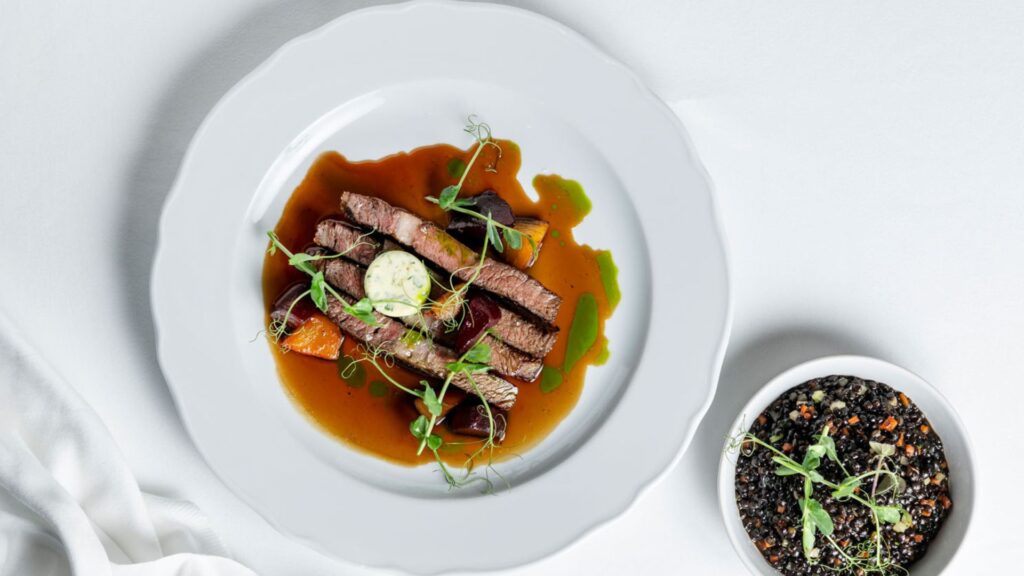
What goes well with steak?
A great steak is rarely served alone. The right accompaniments elevate the entire experience.
Side dishes
- Roasted or mashed potatoes
- Grilled vegetables
- Fresh salads
These provide balance and contrast to the richness of the meat.
Sauces
- Pepper sauce
- Herb butter
- Light jus
Sauces should enhance, not overpower, the steak.
Wine pairing
Food & wine pairing is also not insignificant. Steak pairs naturally with red wines:
- Cabernet Sauvignon – bold, structured
- Merlot – softer, fruit-forward
Hungarian red wines, particularly from Villány or Eger, also complement steak beautifully, adding local character to the experience.
Where to eat steak in Budapest
Steak is not just about the plate — it’s about the setting. The right atmosphere, service, and surroundings turn a good meal into a memorable one.
A high-quality restaurant Budapest visitors choose for steak will focus on sourcing, preparation, and consistency. At the same time, a refined Hungarian restaurant Budapest can combine international steak traditions with local culinary identity.
Steak in Buda: atmosphere matters
Dining on the Buda side offers a slower, more relaxed experience. A carefully selected Buda restaurant provides not only excellent food but also a sense of place. In the historic surroundings of a Buda Castle restaurant, steak becomes part of a larger cultural journey.
Zsidai Group: steak experiences in Budapest
Several Zsidai Group restaurants offer excellent steak options, each with its own character:
- Baltazár Grill: the most steak-focused venue, known for high-quality meats and a relaxed, vibrant atmosphere. A natural choice for steak lovers.
- ÉS Bisztró: modern, urban dining with premium dishes, ideal for combining steak with a stylish city experience.
- Pest-Buda Bistro: traditional Hungarian flavors with a refined twist, offering a unique take on classic dishes alongside international favorites.
- June: contemporary Hungarian cuisine where steak appears in a modern, creative context.
These venues combine expertise, location, and atmosphere, making them ideal for exploring steak in Budapest.
Steak tips for beginners and enthusiasts
How to order steak confidently
Don’t hesitate to ask about the cut, origin, and recommended doneness. A good restaurant will guide you.
How to read a menu
Look for details like dry-aging, origin (e.g., Angus, Wagyu), and preparation style. These indicate quality.
What to ask your server
Ask for pairing recommendations — especially wine. This is often where the experience becomes exceptional.
Steak is more than a dish, it’s an experience
Steak is one of the simplest dishes — and one of the most complex. It’s about precision, quality, and understanding. It’s about knowing the difference between cuts, respecting the cooking process, and pairing it with the right elements.
And in a city like Budapest, where gastronomy meets history and atmosphere, steak becomes more than a meal. It becomes part of the journey.
Because the best dining experiences are not just about what’s on the plate — but where you are, who you’re with, and how every detail comes together.