


A great meal is never just about the food. It’s about balance, atmosphere, and the subtle details that turn a good experience into a memorable one. One of the most powerful — yet often underestimated — elements of dining is wine. The right glass, paired with the right dish, doesn’t just accompany the meal; it transforms it.
This is the essence of food wine pairing. It’s not about rigid rules or expert-only knowledge. It’s about understanding how flavors interact, how textures complement each other, and how a simple pairing can elevate everything on the table.
In Hungary, this philosophy is deeply rooted in tradition. Wine has always been part of the table — not as a luxury, but as a natural extension of the meal.
Why wine has such a strong tradition in Hungarian gastronomy
Hungary’s wine culture dates back more than a thousand years. The Romans already cultivated vineyards in the Carpathian Basin, and by the Middle Ages, Hungarian wines were exported across Europe. Wine was not reserved for special occasions — it was part of everyday life.
This historical depth is one of the reasons why wine pairing feels so natural in Hungarian gastronomy. It’s not something added later; it has always been there.
Hungary’s unique wine regions
Hungary offers a surprisingly diverse range of wine regions, each with its own identity:
- Tokaj: world-famous for its sweet wines, especially Tokaji Aszú
- Eger: known for structured reds like Bikavér (Bull’s Blood)
- Villány: producing full-bodied, powerful red wines
- Lake Balaton: home to fresh, mineral-driven white wines
This diversity allows Hungarian cuisine to pair naturally with local wines, creating combinations that have evolved together over centuries.
Wine as part of the dining experience
In Hungary, wine is not just something you drink alongside a meal. It is part of the flavor experience. It enhances, balances, and sometimes even redefines the dish. Sharing wine is also a social ritual — it slows down the meal, encourages conversation, and turns dining into an experience.
What happens when you pair food and wine correctly?
Flavor interaction explained simply
At its core, pairing is about interaction:
- Acidity cuts through fat – a fresh white wine can balance creamy dishes
- Tannins soften with protein – red wines feel smoother with meat
- Sweetness balances spice – a slightly sweet wine can calm heat
These interactions create harmony, making both the food and the wine taste better.
How wine enhances taste
A well-chosen wine doesn’t overpower the dish — it amplifies it. It can bring out hidden aromas, highlight textures, and add complexity to every bite. Sometimes, the combination creates entirely new flavor sensations that neither the food nor the wine could achieve alone.
Physical and sensory effects
Wine also affects how we perceive food. It stimulates the palate, enhances aroma perception, and can even support digestion. That’s why a meal with well-paired wine often feels more complete and satisfying.
The basics of food and wine pairing everyone should know
Understanding a few simple principles can make a big difference.
- Match intensity
Light dishes work best with lighter wines, while rich, heavy dishes require wines with more body. A delicate salad pairs well with a crisp white, while a slow-cooked meat dish calls for a fuller red.
- Balance acidity and fat
Fatty or creamy foods benefit from wines with higher acidity. The acidity cuts through richness and refreshes the palate, making each bite feel balanced.
- Complement or contrast
There are two main approaches to pairing:
- Complement: matching similar flavors (e.g., earthy food with earthy wine)
- Contrast: balancing opposites (e.g., creamy dish with acidic wine)
Both can work beautifully when done right.
Classic Hungarian food and wine pairings
Hungarian cuisine offers some of the most natural and satisfying pairings.
Goulash and red wines
A rich goulash pairs well with medium-bodied reds like Egri Bikavér. The wine’s structure complements the depth of the dish without overwhelming it.
Chicken paprikash and white wines
The creamy, paprika-based sauce of chicken paprikash works beautifully with fresh, slightly acidic whites like Furmint or Olaszrizling. These wines balance the richness while enhancing the dish’s spice profile.
Foie gras and Tokaji Aszú
One of Hungary’s most famous pairings. The sweetness of Tokaji Aszú perfectly complements the richness of foie gras, creating a luxurious and harmonious combination.
Grilled meats and Villány reds
Full-bodied red wines from Villány, with their bold tannins and deep flavors, pair exceptionally well with grilled meats and barbecue dishes.
Desserts and sweet wines
Hungarian desserts naturally align with sweet wines, creating a seamless continuation of flavors at the end of the meal.
What to avoid: 3 food and wine pairings that don’t work
Even simple mistakes can disrupt the balance.
Heavy tannins with spicy food / Highly tannic red wines can intensify the heat of spicy dishes, making the experience uncomfortable rather than enjoyable.
Sweet wine with savory dishes (in the wrong context) / Sweet wines paired with savory food can feel unbalanced unless the dish itself has a sweet element.
Acidic wine with acidic food / Combining acidic wine with already acidic dishes can result in an overly sharp taste.
Avoiding these pitfalls is just as important as finding the right matches.
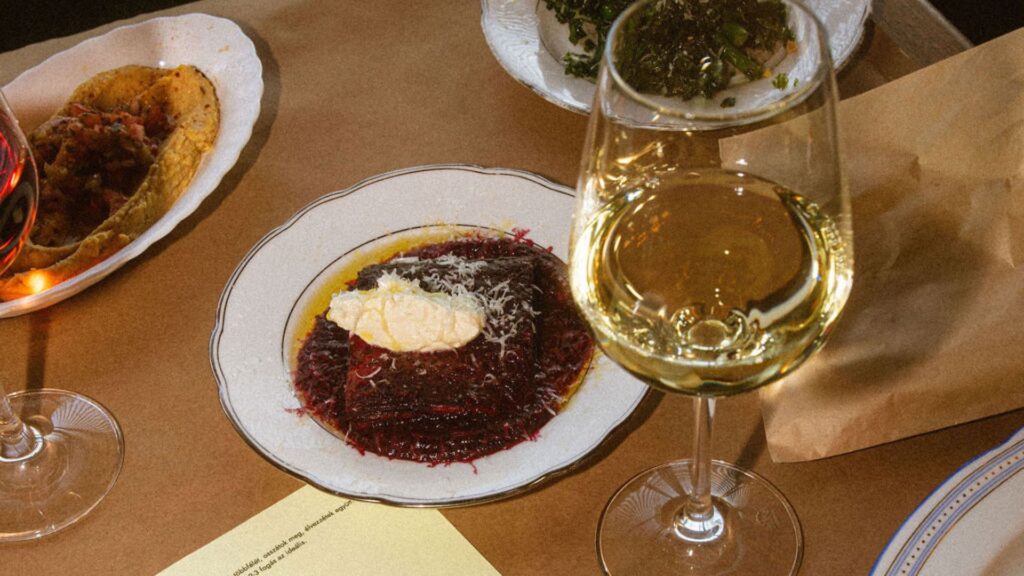
Where to experience food wine pairing in Budapest
While basic pairing principles can be learned anywhere, the real experience comes from tasting curated combinations in the right setting.
A high-quality Hungarian restaurant Budapest visitors choose will often offer thoughtfully selected wine lists designed to complement the menu. In a well-chosen restaurant Budapest setting, pairing becomes effortless — guided by expertise and experience.
On the Buda side, dining takes on a different rhythm. A well-located Buda restaurant offers not only exceptional cuisine but also a calmer, more intimate atmosphere. In the historic surroundings of a Buda Castle restaurant, pairing food and wine becomes part of a larger cultural experience, where history, architecture, and gastronomy meet.
For those who appreciate Mediterranean traditions, an Italian restaurant Budapest can also provide excellent examples of pairing philosophy, rooted in simplicity and regional harmony.
Zsidai Group: curated pairing experiences
Zsidai Group restaurants are particularly well suited for exploring wine pairing in Budapest:
- Pierrot: refined dining in the Castle District, ideal for elegant pairings
- Pest-Buda Bistro: traditional Hungarian dishes paired with carefully selected local wines
- 21 Hungarian Kitchen: modern interpretations of classic flavors, with contemporary pairing options
- June – a more relaxed setting where pairing becomes accessible and enjoyable
These venues combine location, atmosphere, and expertise, making them ideal for discovering how wine can elevate Hungarian cuisine.
Food wine pairing tips you can use anywhere
- Start simple
You don’t need complex rules. Begin with basic combinations and build your understanding over time.
- Trust your taste
Personal preference matters. The “perfect” pairing is ultimately the one you enjoy most.
- Ask for recommendations
Sommeliers and experienced staff can guide you toward combinations you might not discover on your own.
- Experiment
Pairing is as much about discovery as it is about knowledge. Trying new combinations is part of the experience.
Great meals are about harmony
Food and wine pairing is not about perfection — it’s about balance. It’s about finding combinations that feel right, that enhance the moment, and that turn a meal into something memorable.
Hungary, with its deep wine traditions and rich cuisine, offers one of the best environments to explore this art. And Budapest, with its blend of historic settings and modern gastronomy, is the perfect place to experience it.
Because in the end, the best meals are not just eaten — they are felt, shared, and remembered.