


Some dishes don’t need complexity to become iconic. They rely on something far more powerful: seasonality, balance, and tradition. Lecsó is exactly that kind of dish. Built on just a handful of ingredients, it represents the essence of Hungarian home cooking — honest, vibrant, and deeply rooted in everyday life.
If you want to understand Hungarian cuisine beyond the well-known classics, exploring lecso Hungarian food is a perfect place to start. It’s not just a recipe — it’s a reflection of how Hungarians think about food: simple ingredients, cooked with care, and shared generously.
What is lecsó?
Lecsó is a traditional Hungarian vegetable stew made primarily from three ingredients: peppers, tomatoes, and onions. These are slowly cooked together to create a rich, slightly sweet, and deeply aromatic dish.
At first glance, it may seem simple — even rustic. But this simplicity is deceptive. When prepared properly, lecsó delivers layers of flavor that feel both comforting and complex.
Paprika plays a central role, adding warmth and depth, while the natural sweetness of the vegetables creates balance. The result is a dish that is both light and satisfying at the same time.
The origins and tradition of lecsó
Lecsó has its roots in rural Hungary, where seasonal cooking shaped everyday meals. During late summer and early autumn, peppers and tomatoes were abundant, making lecsó a natural choice.
Families would prepare it in large quantities, often outdoors over open fire, turning cooking into a communal activity. This is where lecsó became more than just food — it became a shared experience.
While its exact origins are difficult to trace, lecsó likely developed alongside the widespread use of paprika in Hungarian cuisine during the 18th and 19th centuries. Over time, it evolved into a staple dish found in homes, markets, and restaurants alike.
When do Hungarians eat lecsó?
Lecsó is closely tied to the seasons.
- Late summer and early autumn – when ingredients are freshest
- Outdoor cooking occasions – festivals, gatherings, family events
- Everyday meals – lunch or dinner
It can be served as a main dish, a side, or even a base for other meals. Its flexibility makes it a year-round favorite, even if it is most authentic during harvest season.
How is lecsó made?
The beauty of lecsó lies in its method.
Core ingredients
- Hungarian wax peppers (or similar sweet peppers)
- ripe tomatoes
- onions
- paprika
- oil or lard
These ingredients form the foundation of the dish.
The cooking process
Lecsó begins with gently sautéing onions in fat, followed by the addition of paprika. This step is crucial — it releases the spice’s aroma and creates the flavor base.
Peppers are added next, followed by tomatoes. The mixture is then slowly cooked until the vegetables soften and release their juices, forming a thick, rich stew. The key is patience. Lecsó should never be rushed. The longer it cooks, the more the flavors come together.
Variations of lecsó: from classic to creative
One of the reasons lecsó remains popular is its versatility.
- Classic lecsó
The simplest version contains only vegetables and paprika. It’s light, fresh, and highlights the natural flavors of the ingredients.
- Lecsó with sausage
Adding smoked sausage introduces depth and richness. This is one of the most popular variations in Hungary.
- Egg-based lecsó
Eggs are stirred into the finished dish, creating a softer, creamier texture. Often served as a hearty breakfast or light meal.
- Rice or pasta variations
In some versions, lecsó is combined with rice or pasta, making it more filling.
- Modern interpretations
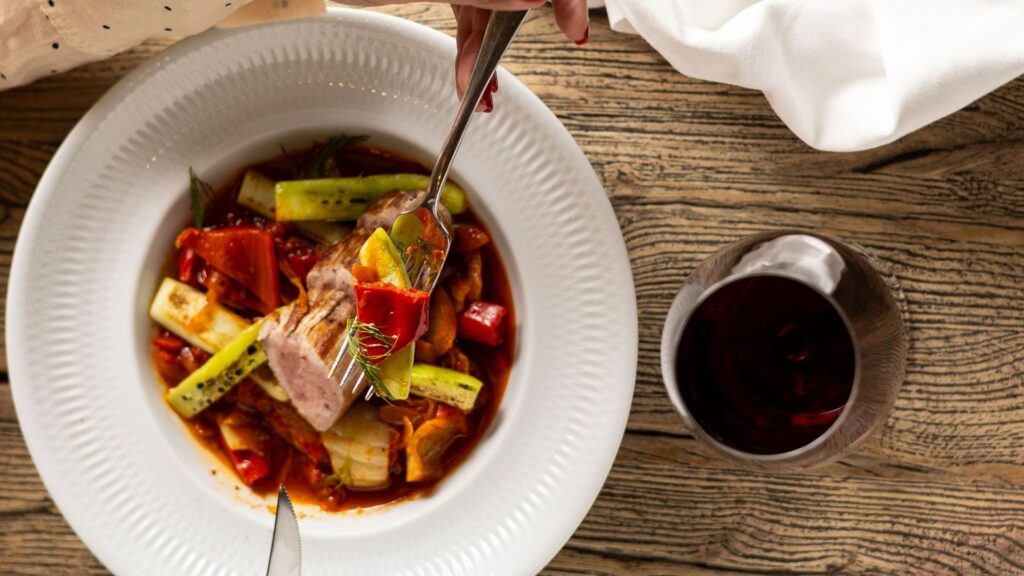
Today, chefs experiment with lecsó by adding gourmet ingredients or presenting it in refined ways, while still respecting its traditional roots.
What is lecsó similar to?
Lecsó is often compared to other European vegetable dishes.
Ratatouille (France): Both dishes use similar ingredients, but ratatouille is more herb-driven and structured, while lecsó is softer and more paprika-focused.
Peperonata (Italy): Italian peperonata shares the sweet pepper base, but differs in seasoning and preparation style.
Shakshuka (Middle East): Egg-based lecsó variations resemble shakshuka, though the flavor profiles differ due to the use of paprika.
These comparisons highlight lecsó’s place in a broader culinary tradition — yet its identity remains uniquely Hungarian.
Where to taste authentic lecsó in Budapest
To truly experience lecsó, it’s best to taste it in a setting where tradition is respected and quality is a priority.
A carefully chosen restaurant Budapest visitors trust will highlight seasonal ingredients and authentic preparation methods. In a well-established Hungarian restaurant Budapest, lecsó is not treated as a side dish — it is given the attention it deserves.
Experiencing lecsó in Buda
Dining in a Buda restaurant offers a more relaxed, intimate experience. The atmosphere encourages slower meals and deeper appreciation of flavors. In a historic Buda Castle restaurant, lecsó becomes part of a larger story — one that connects food, culture, and place.
Zsidai Group: authentic lecsó experiences
Zsidai Group restaurants provide excellent opportunities to discover lecsó in its most authentic form.
- Fekete Holló – here, lecsó is served in traditional variations such as lecsó with roasted sausage and egg-based lecsó with sausage. These dishes reflect the essence of Hungarian home cooking, elevated by high-quality ingredients and careful preparation.
This is where the phrase lecho Budapest takes on real meaning — not just a dish, but an experience tied to location, tradition, and atmosphere.
Classic vs modern lecsó: tradition meets innovation
While traditional lecsó remains widely loved, modern chefs continue to reinterpret it.
- refined plating
- premium ingredients
- lighter textures
- creative pairings
Yet even in its most modern form, the core remains unchanged: peppers, tomatoes, and paprika, working in harmony.
This balance between tradition and innovation is what keeps lecsó relevant in today’s culinary world.
What to drink with lecsó?
Lecsó pairs best with lighter, refreshing drinks.
- Dry white wines – crisp and balanced
- Light red wines – low tannin, fruit-forward
- Spritzers (fröccs) – a classic Hungarian choice
The goal is to complement the dish without overpowering its delicate balance.
Why you should try lecsó in Budapest
Budapest is a city where food tells stories. And lecsó is one of the simplest — yet most authentic — ways to experience those stories.
It connects you to the seasons, to tradition, and to a style of cooking that values honesty over complexity. Because sometimes, the most memorable dishes are not the most elaborate ones — but the ones that feel real.