


Just six ingredients: mascarpone, egg yolks, sugar, coffee, ladyfingers and cocoa. On paper, it seems almost suspiciously simple for a dessert that has become as much a part of Italy’s gastronomic image as pizza or pasta. Yet tiramisu is an unforgiving dessert precisely because there is nowhere to hide mistakes.
If the coffee is bad, you will taste it. If the mascarpone cream is too runny, it will collapse. If the ladyfingers absorb too much coffee, they turn to mush; if too little, they remain dry. And if the whole dessert is too sweet, that bittersweet, creamy balance disappears, the very balance that makes you think about the next spoonful as soon as you have finished the last.
It is no coincidence, then, that searches for tiramisu in Budapest today are driven by more than simply a craving for dessert. Many people are looking for an authentic Italian experience, while others are curious about how such a well-known classic can be reimagined while still remaining tiramisu.
Where Should You Eat Tiramisu in Budapest? Let’s Start with the Italian Side
In the case of Jamie’s Italian, located in Buda Castle, the concept itself makes tiramisu a logical choice.
The restaurant associated with Jamie Oliver draws on Italian regional flavours and ingredients, while giving the classics Jamie’s own, more playful interpretation.
The tiramisù on the current dessert menu demonstrates exactly this: layers of alcohol-infused, coffee-soaked ladyfingers are served with light mascarpone cream and rich chocolate. The alcohol and chocolate take the dessert in a more modern, richer direction, while its main characteristics – coffee, mascarpone and soft ladyfingers – remain instantly recognisable.
And What Happens If We Remove the Caffeine?
This is where the story becomes truly interesting. At first glance, the Hungarian–Middle Eastern sharing concept of June, located in MOM Park, seems further removed from Treviso. Yet tiramisu appears on its current dinner menu, in a decaffeinated version. This may seem like a small modification, but it actually raises an interesting question.
If the flavour of coffee remains but the caffeine disappears, do we still perceive it as authentic?
From a gastronomic perspective, there is no reason why we should not. The role of coffee is primarily its flavour, aroma and contrast with mascarpone. Caffeine itself does not determine the structure of the dessert.
Tradition or Reinvention? Budapest Has Room for Both
The popularity of tiramisu beautifully demonstrates how urban gastronomy works today.
There are dishes we return to because we expect exactly what we already know. At other times, we want to see what another restaurant or a different cultural environment can do with them.
Different culinary worlds also coexist among the Zsidai restaurants. In Buda Castle, Pierrot builds on elegant, contemporary interpretations of Hungarian culinary classics, while June offers more relaxed dishes designed for sharing.
This is interesting because the same guest might crave Italian tiramisu one evening and, the next day, want to explore local dessert culture through the offerings of a Hungarian restaurant in Budapest.
Good urban gastronomy does not force us to choose between the two, but gives us the opportunity to enjoy both.
What Does Tiramisu Actually Mean?
The name is surprisingly playful. The Italian tirami su roughly means “cheer me up”, “lift me up”, or, in English, “pick me up”. According to the Accademia del Tiramisù, the name comes from the Venetian dialect form tiremesù and refers to the fact that the dessert, made with coffee, eggs and sugar, provides energy and a boost.
What Is the Secret of the Original Recipe?
The original Italian tiramisu is much simpler than many of the versions known today. The Treviso recipe published by the Accademia Italiana della Cucina contains six basic ingredients: egg yolks, sugar, mascarpone, savoiardi ladyfingers, coffee and unsweetened cocoa. Neither whipped cream, chocolate sauce nor alcohol is necessary. And that is precisely what makes it interesting. Balance must be created from just a few components.
Mascarpone gives the dessert its body. With good-quality ingredients, the cream is silky, full and rich, yet not heavy. If it is too loose, the layers will not hold their shape; if it is too dense or becomes buttery when cold, the airy character of tiramisu is lost.
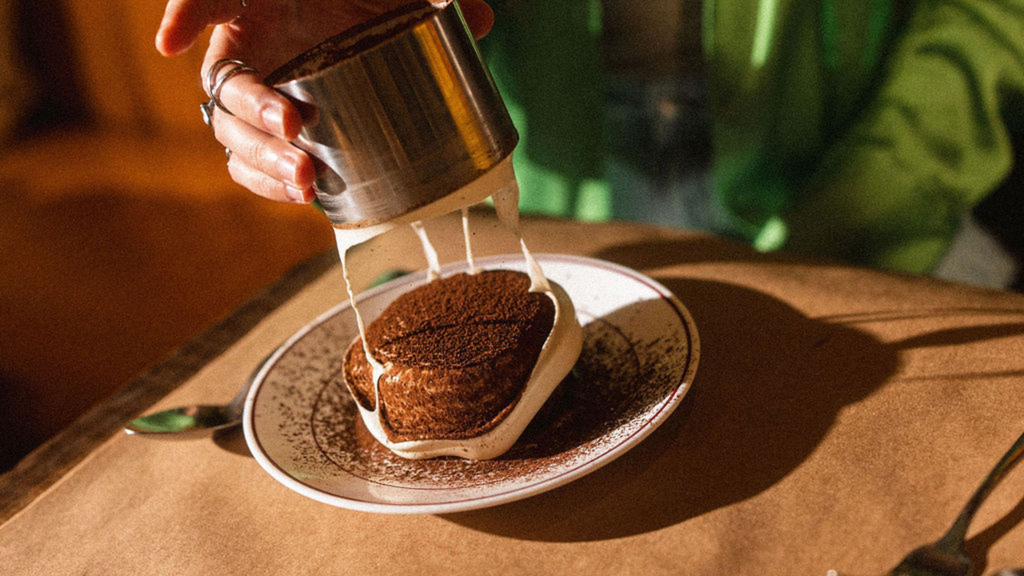
One of the most important characteristics of perfect tiramisu is therefore its texture: the spoon should pass through it easily, but the dessert should not spread across the plate. The cream and coffee-soaked ladyfingers should almost merge into a single texture, while the layers remain recognisable.
And Why Is Coffee So Important?
Because tiramisu is actually just as much a coffee dessert as it is a mascarpone-based sweet. The traditional recipe uses cooled coffee, into which the savoiardi are dipped only briefly. In the original category of the Tiramisu World Cup, for example, contestants are provided with bitter coffee prepared in a moka pot.
The key is intensity. The coffee must cut through the richness of the mascarpone and sugar. If it is too weak, the dessert becomes one-dimensionally sweet. If too much coffee is absorbed by the ladyfingers, they lose their structure.
That is why truly good tiramisu is not a coffee-flavoured cake, but rather a creamy dessert in which coffee provides the counterbalance.
6 Signs That You Have Been Served a Good Tiramisu
- The cream is light but holds its shape – it does not spread across the plate.
- The coffee is clearly noticeable, but does not make the entire dessert bitter.
- The ladyfingers are soft, not mushy.
- The flavour of mascarpone is recognisable, rather than being hidden behind sugar or whipped cream.
- The cocoa provides a genuine contrast, rather than serving merely as decoration.
- No single element tries to take centre stage – the strength of a good tiramisu lies precisely in its balance.
Classic or Modern? How Much Creativity Can Tiramisu Accommodate?
Surprisingly, quite a lot. One of the reasons for tiramisu’s worldwide success is precisely how easily it can be reinterpreted. The historical overview by the Italian Academy of Gastronomy also notes that its simple basic structure has allowed for almost endless variations.
Today, we can find pistachio, strawberry, lemon, matcha, caramel or alcoholic versions; it can be prepared in a glass, as a cake, as a plated dessert, or even in the form of ice cream.
If we encounter a reimagined tiramisu on the menu of a restaurant in Budapest, ultimately, we should look for the same things: good mascarpone, distinctive coffee, the right texture and proportions that, after the second spoonful, make us stop wondering how authentic it is and start wondering whether there is any left.