


There is a particular moment on a summer evening in Budapest when the city seems to exhale. The afternoon heat softens, conversations drift from cafés onto terraces, glasses clink somewhere beneath centuries-old façades, and another freshly poured pint lands on a wooden table. Around it, people linger. Nobody seems to be in a hurry. Friends debate where to continue the evening, tourists compare discoveries from the day, and locals quietly enjoy the luxury of having nowhere else to be.
Beer has always been more than just a drink in Hungary.
It is part of everyday life, of celebrations, long conversations and spontaneous gatherings. While Hungarian wine often takes the spotlight internationally, Budapest has quietly built a beer culture that is every bit as interesting—one rooted in tradition, yet constantly reinventing itself.
Today, anyone searching for the best beer Budapest experience will discover far more than traditional pubs. The Hungarian capital has become one of Central Europe’s most dynamic destinations for beer lovers, where historic beer halls, contemporary breweries and lively beer gardens exist side by side.
Hungary’s long relationship with beer
Although Hungary is often associated with Tokaji, Bull’s Blood or other renowned wines, beer has been brewed and enjoyed here for centuries.
Modern Hungarian brewing began to flourish during the nineteenth century, when industrialisation transformed the country and the influence of the Austro-Hungarian Monarchy brought Central European brewing traditions to Budapest. Czech pilsners, Bavarian lagers and Austrian brewing techniques all helped shape Hungarian tastes, while local breweries gradually developed their own identity.
For decades, lager dominated the Hungarian market. Crisp, refreshing and easy to drink, it naturally complemented the country’s hearty cuisine and became the beer of family gatherings, summer festivals and evenings spent on restaurant terraces.
But over the last fifteen years, something remarkable has happened.
From traditional lagers to a craft beer revolution
Budapest has experienced a transformation similar to what cities like Copenhagen, Berlin and Prague went through before it. A new generation of independent brewers began experimenting with recipes, ingredients and brewing methods. Instead of producing millions of identical bottles, smaller breweries focused on creativity, freshness and character.
This movement changed how Hungarians thought about beer. Rather than simply ordering “a beer,” people started asking questions.
Which hops were used? Is it dry-hopped? Does it have citrus notes? What food pairs best with it?
As a result, Budapest evolved from a city known mainly for traditional lagers into one of the region’s most exciting destinations for beer enthusiasts.
Today, local breweries regularly win international awards, while visitors increasingly include craft beer bars and breweries alongside museums and historic landmarks on their travel itineraries.
What exactly is craft beer?
The term “craft beer” is often used, but surprisingly few people can define it clearly. In essence, craft beer is brewed by relatively small, independent breweries that prioritise quality, experimentation and flavour over mass production.
Unlike industrial breweries, which focus on consistency across millions of litres, craft brewers are free to experiment with:
- different hop varieties
- specialty malts
- wild yeasts
- seasonal ingredients
- barrel ageing
- unique fermentation techniques
The result is a much wider range of aromas and flavours.
A craft IPA may offer notes of grapefruit, tropical fruit and pine. A porter can reveal chocolate and roasted coffee, while a wheat beer might surprise drinkers with hints of banana or clove created naturally during fermentation.
Each beer becomes an expression of the brewer’s creativity rather than simply another product on a supermarket shelf.
How is craft beer different from industrial beer?
The difference isn’t about one being “better”, they simply serve different purposes.
Industrial breweries aim for absolute consistency. Whether you open the same brand in Budapest, Vienna or London, it should taste almost identical every time.
Craft breweries, on the other hand, celebrate individuality.
Many produce limited seasonal releases, collaborate with other brewers or create recipes inspired by local ingredients. Small-batch brewing allows them to respond quickly to new ideas and changing tastes, making the beer scene far more dynamic.
This spirit of experimentation mirrors broader food culture trends. Just as specialty coffee transformed how people think about coffee beans and roasting, craft beer has encouraged drinkers to appreciate ingredients, brewing techniques and flavour profiles in much greater detail.
Why Budapest became a Central European craft beer hub
Several factors came together at exactly the right moment. The city’s vibrant restaurant scene created demand for more diverse drinks. Young chefs began designing menus that paired naturally with different beer styles rather than relying exclusively on wine.
At the same time, Budapest’s creative districts became home to independent breweries and taprooms, attracting both locals and international visitors.
Another important influence has been tourism. Travellers arriving from countries with strong beer traditions—such as Germany, Belgium, the Czech Republic and the United Kingdom—often seek authentic local beers rather than familiar international brands. Budapest responded by embracing both tradition and innovation.
Today, respected Hungarian breweries such as Mad Scientist, MONYO Brewing, Horizont Brewing and FIRST Craft Beer have helped position the city firmly on Europe’s craft beer map.
Rather than copying foreign styles, many Hungarian brewers have developed their own interpretations, producing beers that combine international brewing techniques with local creativity.
Which beer styles should you try in Budapest?
One of the pleasures of exploring Budapest’s beer scene is discovering just how diverse it has become.
Lager
Still the country’s most widely enjoyed style, Hungarian lagers are clean, crisp and refreshing. They remain perfect companions for warm summer afternoons spent on restaurant terraces.
IPA (India Pale Ale)
IPAs have become favourites among craft beer lovers thanks to their expressive hop character. Depending on the brewery, they may showcase citrus, tropical fruit, floral aromas or gentle bitterness.
Wheat beer
Soft, refreshing and highly drinkable, wheat beers are particularly popular during the warmer months. Their light body makes them ideal for long lunches or relaxed afternoons outdoors.
Porter and stout
Darker styles have gained popularity among those looking for richer, fuller-bodied beers with roasted malt, chocolate and coffee notes.
Sour beers
Although still a niche category, fruity sour beers have become increasingly common in Budapest’s craft beer bars, especially during summer.
Their bright acidity offers an entirely different beer experience, demonstrating just how creative Hungarian brewers have become.
One thing quickly becomes clear while exploring Budapest’s beer culture: no single style defines the city anymore. Diversity has become its greatest strength.
That diversity is also reflected in the places where beer is enjoyed—from contemporary taprooms and lively urban terraces to historic courtyards tucked beneath the medieval walls of Buda Castle.
Beer and Hungarian cuisine: finding the perfect pairing
Just as Hungarian wine has long been associated with certain dishes, beer deserves the same attention at the table.
Its carbonation refreshes the palate, its bitterness balances richness, and depending on the style, it can either complement or completely transform a meal. Choosing the right beer is less about following strict rules than about understanding how flavours interact.
- A crisp lager works beautifully with classic Hungarian comfort food. Its clean finish cuts through richer dishes such as chicken paprikash, Wiener schnitzel or fried fish, while allowing the delicate paprika flavours to remain the focus.
- An IPA pairs particularly well with grilled meats, gourmet burgers and spicy sausages. The bold hop profile stands up to stronger flavours without overpowering them.
- Wheat beer offers something entirely different. Light, refreshing and slightly fruity, it complements grilled chicken, fresh seasonal salads and lighter summer dishes.
- Darker styles, including porter and dark lager, naturally belong alongside slow-cooked Hungarian favourites: beef stew, roasted pork shoulder or crispy pork knuckle.
Like every memorable meal, the best pairings are ultimately about balance rather than rules.
Where to enjoy beer in Budapest
Beer tastes different depending on where you drink it.
Around Buda Castle
A perfectly poured pint enjoyed beneath medieval walls tells a different story than one ordered in a crowded sports bar. Around Buda Castle, the surroundings become part of the experience: centuries-old streets, hidden courtyards and terraces that slow the pace of the city create an atmosphere where conversations naturally grow longer.
Spíler Biergarten: Bavarian tradition with a Budapest personality
Among the area’s beer destinations, Spíler Biergarten brings together Central Europe’s long-standing beer garden culture with Budapest’s contemporary energy.
Located on Dísz Square in the heart of the Castle District, it draws inspiration from traditional Bavarian biergartens while adding a distinctly modern character. Long communal tables, generous portions, freshly grilled dishes and the easy rhythm of outdoor dining create an atmosphere where people tend to stay longer than planned.
Spíler Original: where Budapest’s modern beer culture comes alive
While the Castle District celebrates history, Spíler Original reflects another side of Budapest.
Situated in the lively Gozsdu Courtyard, it embraces the city’s cosmopolitan rhythm. Here, craft beer meets contemporary comfort food, international influences mix with local ingredients, and the atmosphere shifts effortlessly from relaxed daytime lunches to energetic evenings.
Its carefully curated beer selection sits alongside signature cocktails and an inventive kitchen, making it a favourite meeting place for both locals and international visitors.
The story behind Spíler Beer
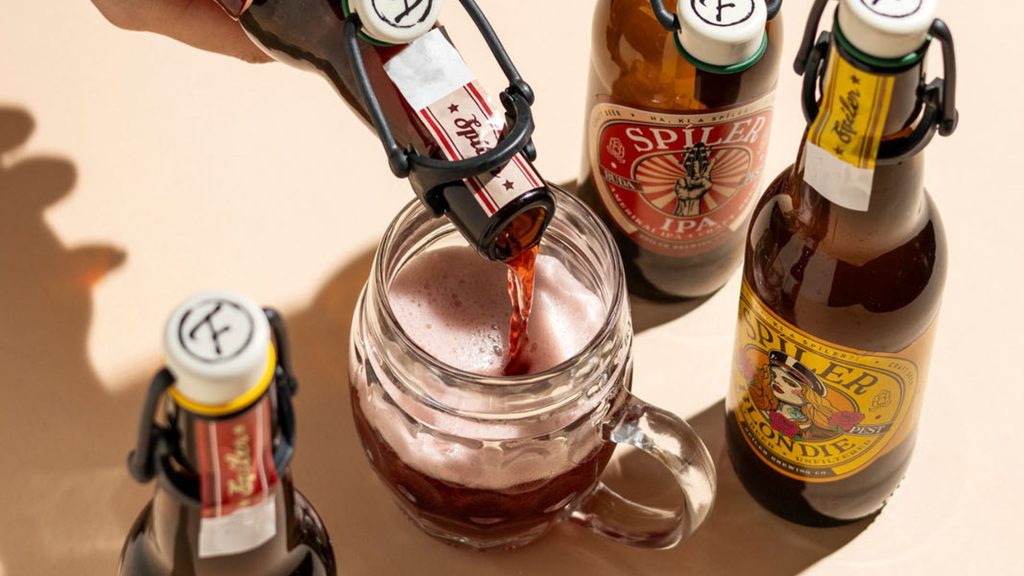
One of the most distinctive elements shared across the Spíler restaurants is their own beer.
Rather than relying exclusively on well-known international labels, guests can also enjoy Spíler Beer, a house beer created to complement the restaurants’ culinary philosophy. It has become part of the group’s own gastronomic identity, offering a flavour profile designed to accompany both contemporary comfort food and classic Central European dishes.
Beer is becoming part of Budapest’s cultural identity
Independent breweries continue to experiment with new ingredients, restaurants increasingly build beer pairings into their menus, and visitors arrive expecting to discover flavours that cannot be found elsewhere. Beer festivals, brewery collaborations and seasonal releases have transformed Budapest into one of the most exciting destinations for enthusiasts travelling through Central Europe.
Yet what makes the city’s beer culture memorable is not simply the quality of what’s in the glass. It is the context.
A beer enjoyed after climbing to Fisherman’s Bastion tastes different because of the view. Another shared beneath the trees of a historic courtyard becomes part of a conversation that stretches long into the evening. The setting, the company and the rhythm of the city shape the experience as much as the brewing itself.
Even those searching primarily for a restaurant Budapest recommendation often discover that the most memorable meals begin with a well-chosen local beer. Likewise, a thoughtfully selected Hungarian restaurant Budapest offers more than traditional recipes—it provides an opportunity to experience how Hungary’s evolving beer culture naturally complements its rich culinary heritage.